History, Features and Stories
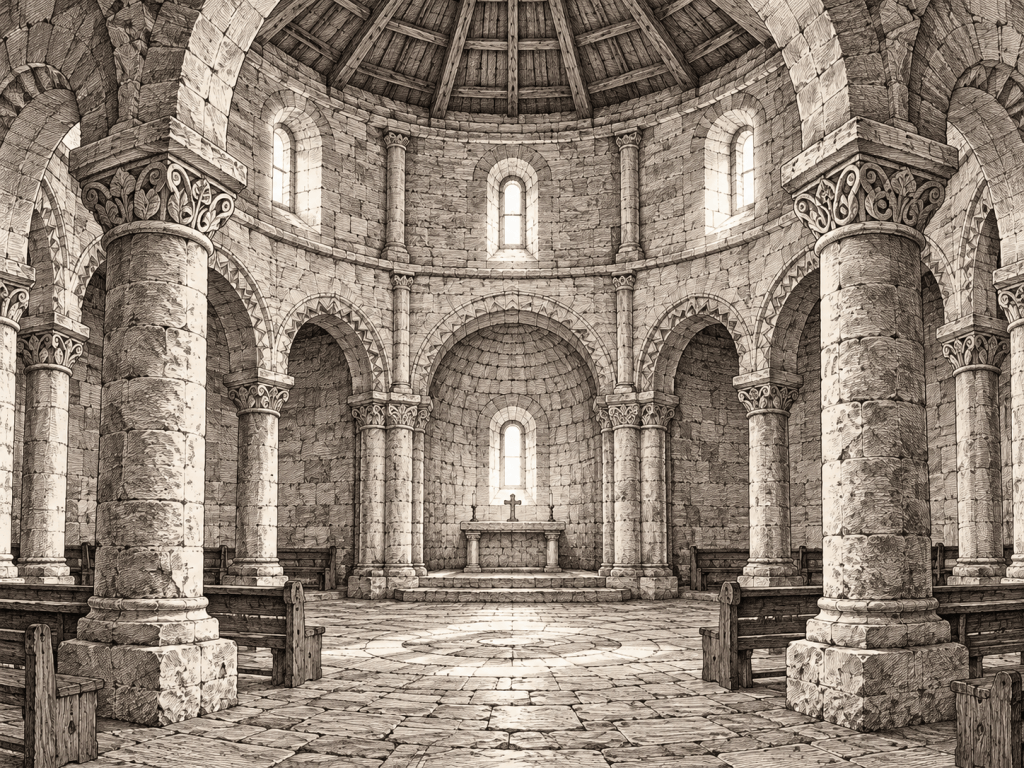
Britain’s medieval round churches are among the rarest and most remarkable surviving examples of Norman and medieval architecture. Unlike the traditional rectangular churches found throughout the country, these extraordinary buildings were constructed with circular naves, inspired by one of Christianity’s holiest sites: the Church of the Holy Sepulchre in Jerusalem. Built over the site traditionally believed to contain the tomb of Jesus Christ, the Jerusalem church became an important destination for Christian pilgrims. Following the First Crusade and the capture of Jerusalem in 1099, returning crusaders, pilgrims and religious orders brought renewed interest in the architecture of the Holy Land, inspiring the construction of round churches across medieval Britain.
Why were these churches built round? Their circular design was deeply symbolic, reflecting the rotunda surrounding Christ’s tomb in Jerusalem and its association with the Resurrection. The shape was intended to create a spiritual connection between worshippers in Britain and the sacred places of the Holy Land. Architecturally, many featured a central circular nave surrounded by substantial stone columns supporting rounded arches, with an outer ambulatory allowing movement around the central space. Above the arches, some churches incorporated an upper gallery, while narrow Romanesque windows illuminated the interior. Their thick stone walls, carved capitals, decorative chevron arches and unusual circular roof structures made them striking examples of Norman craftsmanship. Although their designs varied, each represented a remarkable achievement in medieval church construction.
The Knights Templar were closely associated with several of Britain’s round churches. Founded in Jerusalem during the early 12th century, the Templars established religious and administrative centres throughout England to support their activities in the Holy Land. At their headquarters in London, the magnificent Temple Church, consecrated in 1185, incorporated a circular nave inspired by Jerusalem. Other Templar round churches were built at locations including Bristol and Temple Bruer in Lincolnshire, where the surviving tower still provides a reminder of the original medieval complex. These churches were places of worship for the brothers of the Order, forming part of larger preceptories that managed estates, collected revenues and supported the Templars’ religious and military commitments.
The Knights Hospitaller, formally known as the Order of St John of Jerusalem, also adopted this distinctive architectural tradition. Originally established to care for sick and vulnerable pilgrims in Jerusalem, the Hospitallers developed into a powerful religious and military order with extensive estates across Britain. One of the finest surviving examples of their architectural heritage is the Church of St John the Baptist at Little Maplestead in Essex. Dating largely from the 14th century, this remarkable round church was associated with a Hospitaller preceptory and continues to serve as a place of Christian worship today. Its circular design reflects the Order’s enduring connections with Jerusalem and the Holy Land.
Not all round churches, however, were founded by the military religious orders. The Church of the Holy Sepulchre in Northampton, traditionally founded around 1100 AD by Simon de Senlis, 1st Earl of Northampton, was established independently of the Knights Templar. Similarly, the Round Church in Cambridge, dating to around 1130, was founded by the Fraternity of the Holy Sepulchre. These examples demonstrate that the influence of Jerusalem extended beyond the crusading orders, inspiring wealthy patrons, religious fraternities and Christian communities to recreate aspects of the sacred architecture they associated with the Holy Land.
Over the centuries, many of Britain’s medieval round churches disappeared through demolition, rebuilding, religious upheaval and changing architectural fashions. Some were replaced with larger churches, while others gradually fell into ruin following the suppression of the Knights Templar or the Dissolution of the Monasteries. Today, only four medieval churches with substantially surviving circular naves remain in England: Northampton, Cambridge, Temple Church in London and Little Maplestead. Each preserves an extraordinary connection with the medieval world, offering visitors an opportunity to experience the architecture, religious beliefs and remarkable history of Britain’s connections with Jerusalem and the Crusades.
A Map of the Rounds Noted as being in the United Kingdom
STORIES
Behind the ancient stone walls of Britain’s round churches lie stories of crusading knights, powerful medieval families, religious devotion and centuries of remarkable history. These extraordinary buildings were far more than unusual places of worship. They witnessed the changing fortunes of medieval England, from the age of the Crusades and the great military religious orders to the upheavals of the Reformation and the transformations of the modern world.
Knights, Crusaders and Medieval Nobility
Perhaps the most famous stories are associated with Temple Church in London, built by the Knights Templar and consecrated in 1185 in the presence of King Henry II. Within its circular nave lie the celebrated medieval knightly effigies, including that traditionally identified as William Marshal, Earl of Pembroke, one of the most influential knights in English history. Marshal served several English kings, helped shape the reign of the young Henry III and played a significant role in the reissue of Magna Carta in 1216. His burial at Temple Church in 1219 illustrates the extraordinary influence and prestige of the Knights Templar in medieval England.
The Legacy of the First Crusade
At Northampton, the Church of the Holy Sepulchre is traditionally associated with Simon de Senlis, 1st Earl of Northampton, and the period following the First Crusade. Its unusual circular design reflects the influence of Jerusalem, where the Church of the Holy Sepulchre stood at the heart of Christian pilgrimage. For more than nine centuries, Northampton’s Round Church has witnessed the town’s changing fortunes, surviving periods of medieval expansion, religious upheaval and extensive rebuilding while preserving much of its original Norman circular architecture.
The Knights Hospitaller and Little Maplestead
The little round church of St John the Baptist at Little Maplestead in Essex tells a different story. Associated with the Knights Hospitaller, whose original mission was to care for sick and vulnerable pilgrims in Jerusalem, the church reflects the religious and charitable traditions of the Order of St John. Its surviving circular nave provides an unusual glimpse into the Hospitallers’ English estates and the wider network of lands, churches and religious houses that supported their work.
Surviving Reformation, Destruction and War
The survival of Britain’s round churches is itself remarkable. Following the suppression of the Knights Templar in 1312 and the Dissolution of the Monasteries in the 16th century, many churches connected with religious orders were abandoned, altered or demolished. Others survived because they continued serving local parish communities. Temple Church in London suffered particularly severe damage during the Second World War, when incendiary bombs struck the building in May 1941, destroying its roof and much of its historic interior. Following years of painstaking restoration, the church reopened in 1958, preserving one of England’s most important surviving examples of Templar architecture.
Stories Still Waiting to Be Discovered
From the remarkable carved corbels and Norman architecture of Northampton to the medieval effigies of London and the Hospitaller heritage of Little Maplestead, every surviving round church has its own distinctive story. Even the lost round churches, whose buildings have disappeared beneath modern streets or farmland, continue to reveal their histories through archaeological discoveries, medieval documents and surviving fragments of stonework. Together, these churches offer a fascinating insight into the people, beliefs and events that shaped Britain’s medieval past.

